
Chess Guides & Advice · · 5 min read
How Is a Handmade Wooden Chess Set Made?
From raw wood to a case ready to play, a handmade chess set passes through many hands: drying, turning, carving the knight, staining, weighting, finishing and the marquetry or pyrographed board. Discover each stage in the workshop.
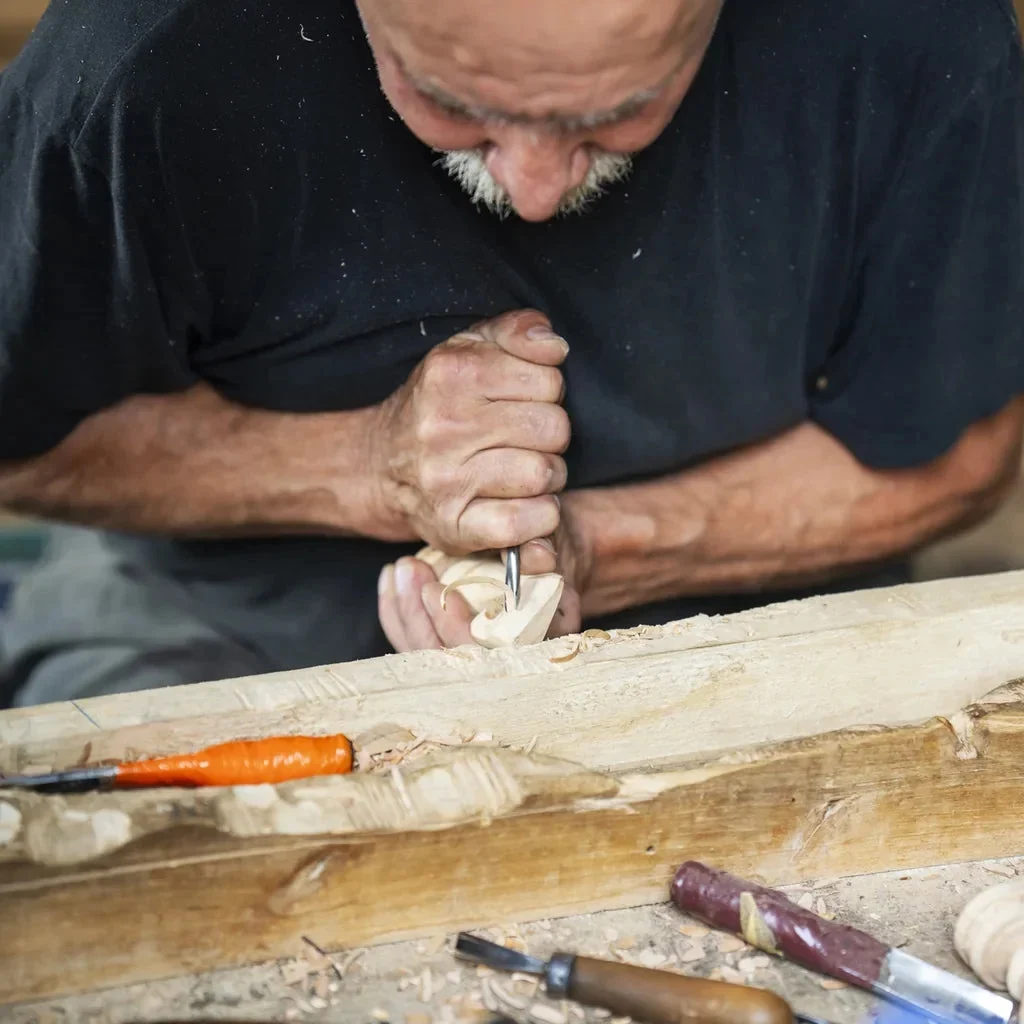
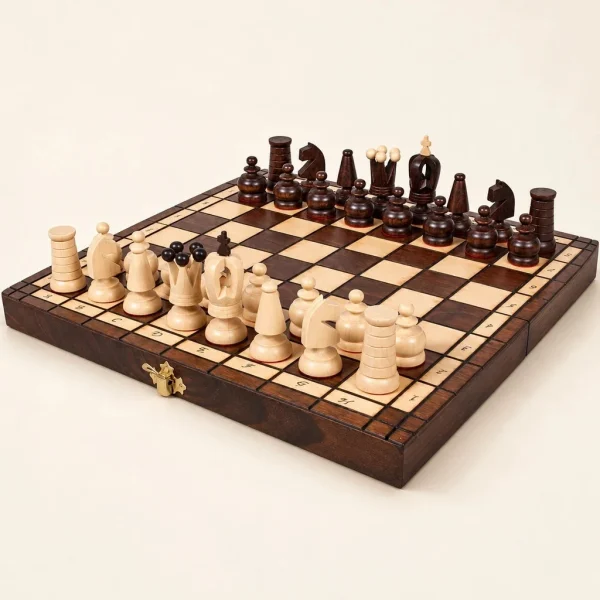
Pick up a wooden knight and turn it slowly: the curve of the neck, the lines of the mane, the way the light catches the edges. On a handmade chess set, no piece is quite identical to its neighbor, and that is precisely what gives it its charm. Our chess sets are handmade in Poland by a family workshop of cabinetmakers, active since 1996. Here, step by step, is how a piece of raw wood becomes a set ready to play.
1. Choosing and drying the wood
It all begins with the choice of species. For the pieces, we favour woods with a fine, even grain, which can be turned and carved cleanly: hornbeam, beech, boxwood, lime or wild cherry, depending on the model. For the boards, the play is on contrast: mahogany, maple, sycamore, walnut, wenge or padauk, often on a beech or birch backing.
Before it is worked, the wood must dry. Wood that is still damp keeps moving after it has been made: it splits, warps, and the pieces lose their balance. Drying gives the wood time to stabilise; it is an invisible stage in the finished product, but essential to its longevity.
2. Turning the pieces
The dry wood is cut into small bars, then mounted on the lathe. The craftsman gives each piece its profile: the base, the shaft, the collars, the head. The pawn, bishop, rook, queen and king are born almost entirely from this stage. To produce consistent sets, the turner relies on templates, then checks the proportions of each piece by eye and by hand.
Next come the details that give a design its personality: the slit in the bishop's mitre, the rook's battlements, the queen's crown and the king's cross on Staunton-style models. These finishing touches are worked by hand, with a chisel and a file.
3. Carving the knight by hand
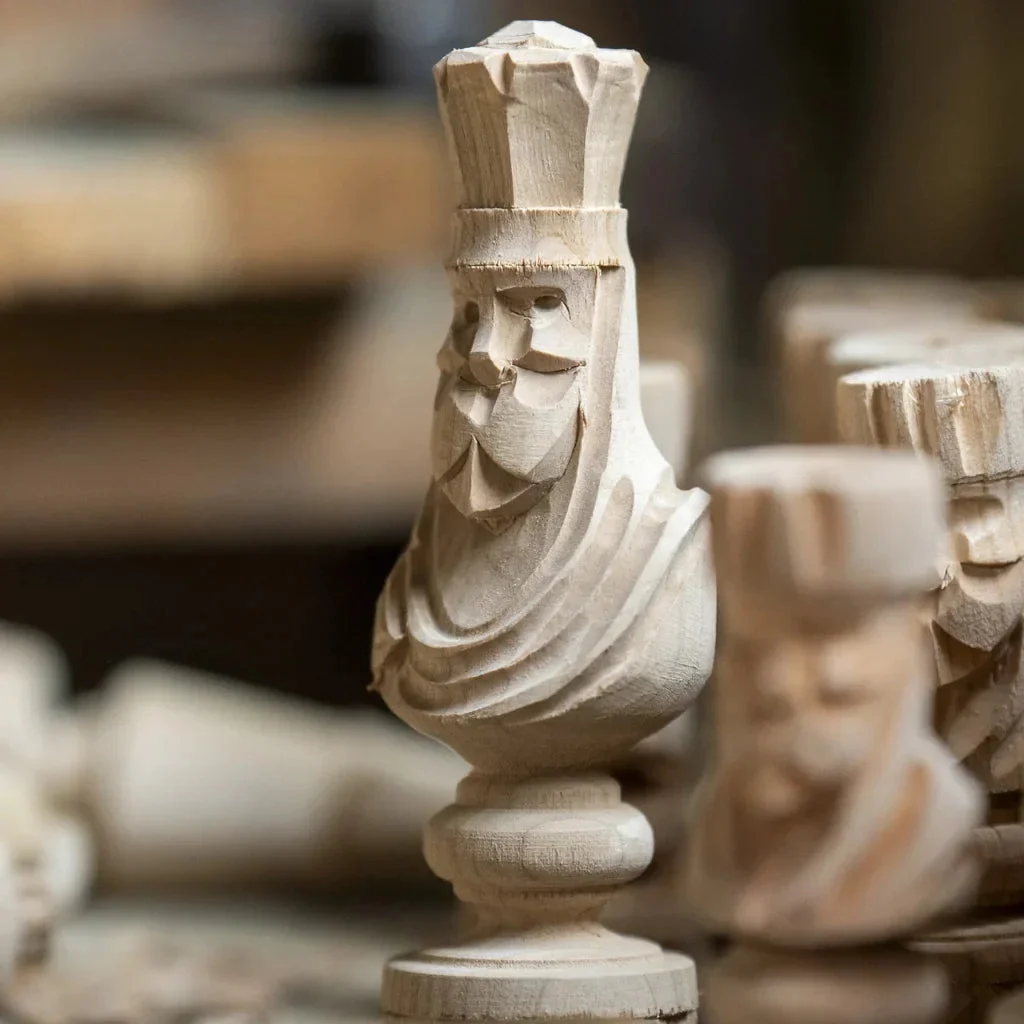
The knight is the only piece that is not made on the lathe. Its horse's head is carved by hand from a roughed-out block, with a wood chisel and then a gouge. It is the stage that demands the most time and experience, and the one that most clearly sets a carved chess set apart from an industrial one: eye, nostrils, mane, every knight bears the mark of the hand that shaped it.
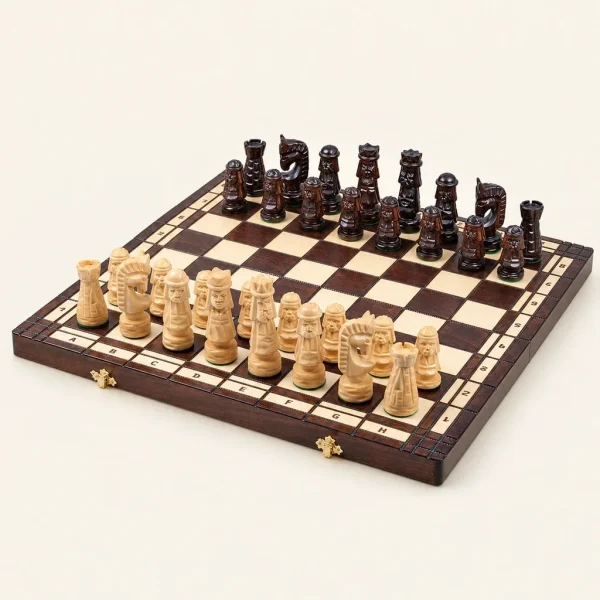
On some models, the carving goes further still. The Tatras features pieces of original design carved from lime wood, and the Empereur brings together hand-carved beech pieces, with a 140 mm king.
4. Sanding, staining and varnish
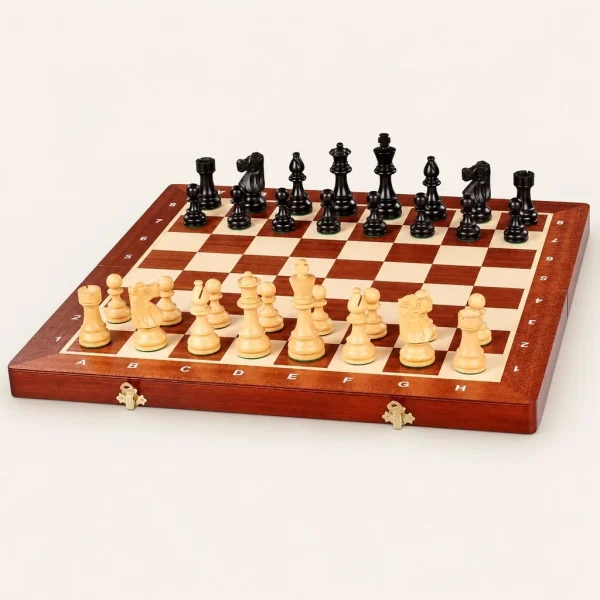
Once shaped, the pieces are sanded with progressively finer grits to give a surface that is smooth to the touch. The dark side is then stained: the stain soaks into the wood rather than covering it, which leaves the grain visible. On some sets, the dark side is ebonised, that is, stained to evoke ebony, as on the Régence No. 4 in boxwood.
A protective finish then seals the wood and gives it its sheen. It makes upkeep easier: a soft, dry cloth is enough to dust the pieces.
5. Weighting and finishing the bases
On weighted models, a weight is inserted in the base of each piece. The set gains in stability: the pieces stand more firmly, don't topple at the slightest touch and land on the square with that pleasing dull little thud. This is the case, for example, with the Régence No. 4 and the Connétable.
The base is then covered to protect the board and make the pieces glide more smoothly. Cases, for their part, often have compartments lined with felt or a fitted insert, so that the pieces don't knock against each other in transit.
6. The board: marquetry or pyrography
Marquetry
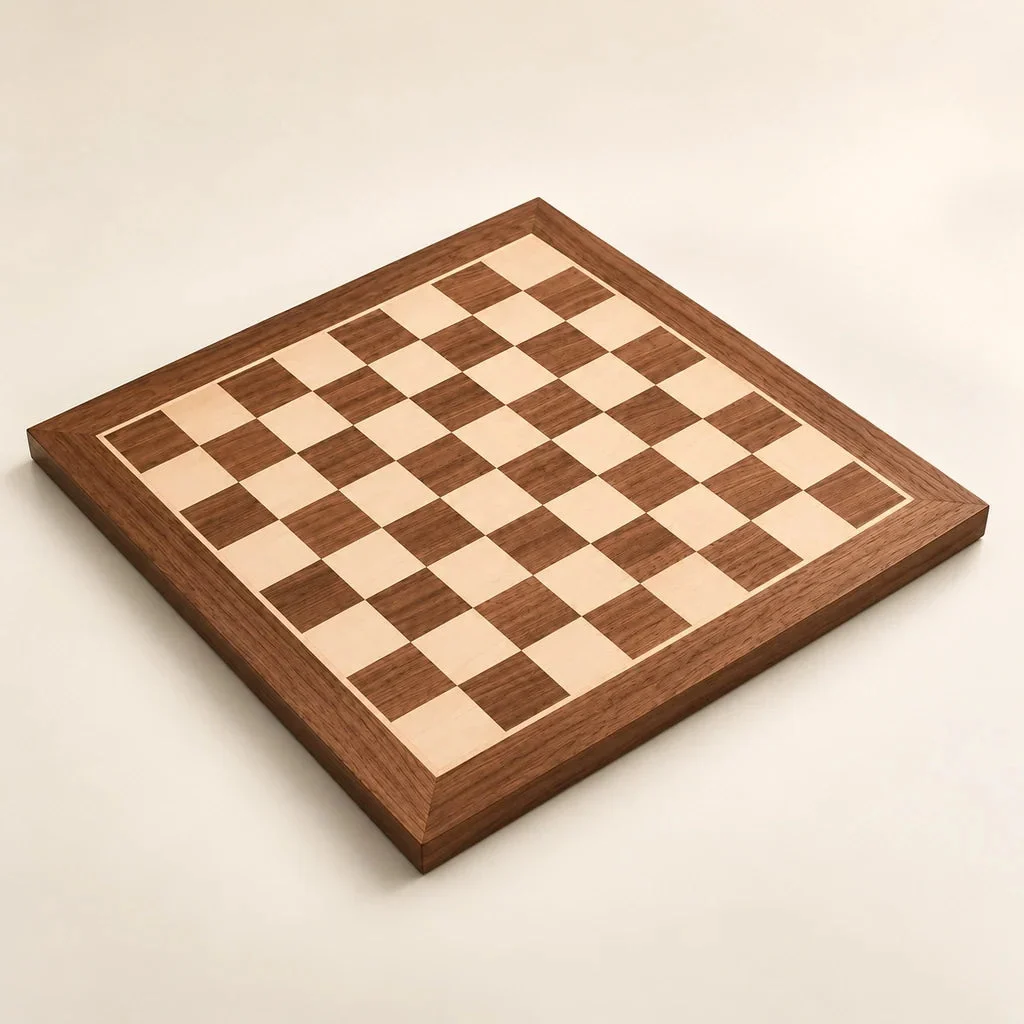
A marquetry board is made of thin sheets of wood in different colors, assembled to form the 64 squares and then glued onto a stable backing. The contrast comes not from paint but from the wood itself: mahogany and sycamore, walnut and sycamore, padauk and maple… It is a demanding technique, because the squares must be perfectly aligned and the joints invisible. The Vendôme is a fine example.
Pyrography
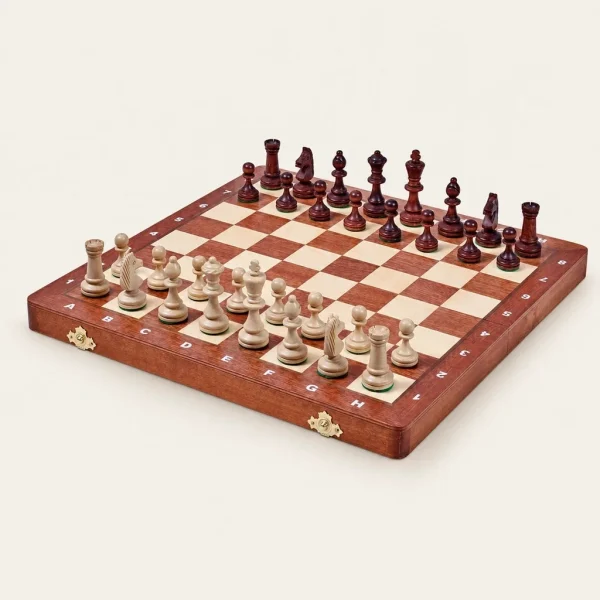
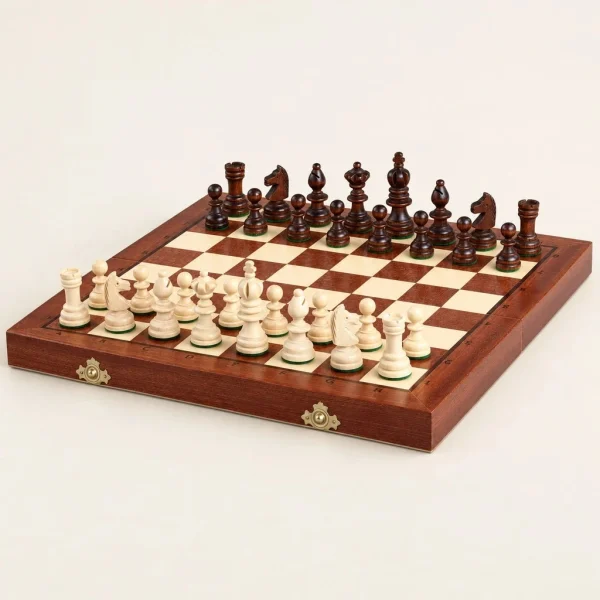
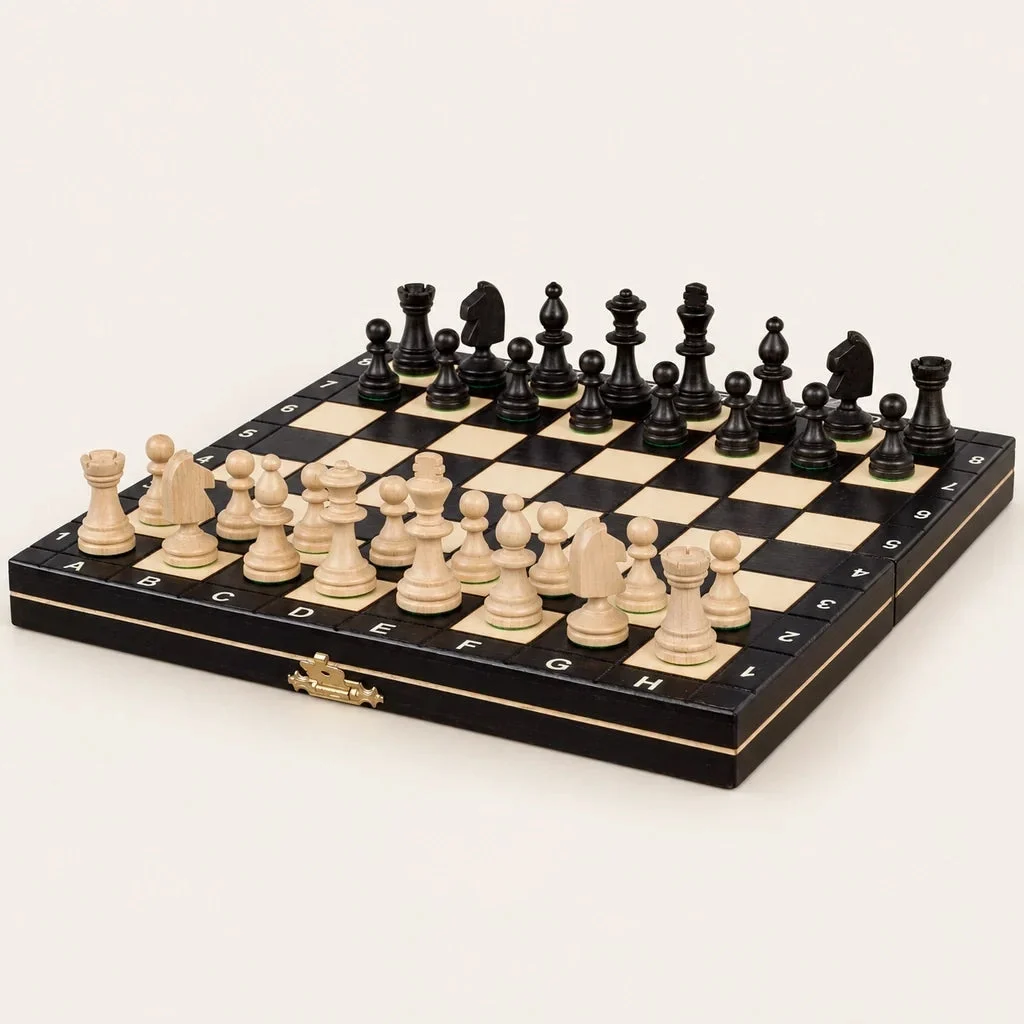
Pyrography involves burning the surface of the wood with a heated tip to draw the dark squares and the decoration. The result, warm and slightly nuanced, is typical of traditional Central European sets. Our Trianon and Petit Trianon models combine a pyrographed folding board with hornbeam and beech pieces.
The folding case
Many of our boards fold into a case. Hinges and a clasp must then be fitted, and the interior arranged to hold the 32 pieces, or even 34 on extra-queen sets.
7. The check before dispatch
Before leaving the workshop, each set is inspected: number of pieces, balance, evenness of the stain, working of the hinges, alignment of the squares. Because the work is done by hand, slight variations in grain or color from one set to another are normal: they are part of the character of a handmade object.
For our part, we provide a 3-year guarantee: if a piece breaks, it is replaced. To make your set last, follow our advice on caring for wood.
Why choose a handmade wooden chess set?
- The feel: hand-turned and hand-sanded wood has a smoothness that plastic does not.
- Stability: well-proportioned bases, often weighted, for pleasant play.
- Longevity: a well-cared-for set is passed down from one generation to the next.
- Character: every carved knight is unique.
To find out more about our approach and our partner workshops, discover our house.
Frequently asked questions
Are all the pieces hand-carved?
The pieces are turned and then finished by hand; the knight is carved by hand. Some models, such as the Tatras or the Empereur, are carved more extensively.
Why can two sets of the same model be slightly different?
Because wood is a natural material and the work is done by hand: the grain, the color and the details of the knight vary slightly from one set to another.
What is a weighted chess set?
It is a set whose pieces contain a weight in their base. They are more stable and more pleasant to move.
Conclusion
Drying, turning, carving, staining, weighting, marquetry or pyrography: behind every handmade wooden chess set lie dozens of skilled gestures. Find the fruit of this craftsmanship in our collection of complete chess sets, handmade in Poland.