
Chess Guides & Advice · · 5 min read
Chess Pieces: Names, Moves and Values
King, queen, rook, bishop, knight and pawn: every chess piece has its own name, its own move and its own value. This guide introduces them one by one, with the origins of their names and the history of the famous Staunton style.
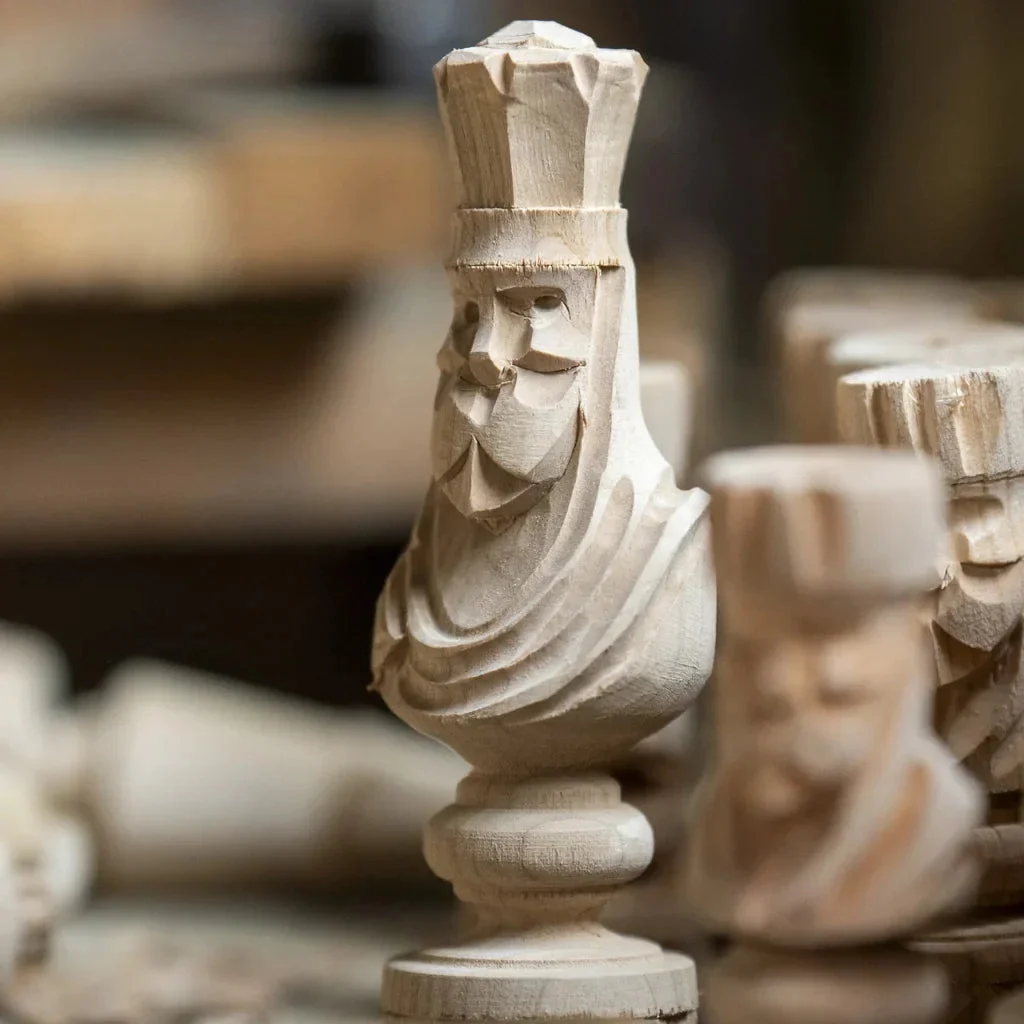
A chess set has 32 pieces, but only six different types. Knowing them by name, how they move and what they are worth is the starting point of every game. It is also the first thing you explain to a child sitting at the chess board. Here is the complete portrait of the chess pieces, from their origins to their value on the board.
How many pieces are there in chess?
Each player has 16 pieces, making 32 in total. They fall into three families:
- the king, unique and irreplaceable;
- the pieces: the queen (one), the rooks (two), the bishops (two) and the knights (two). We distinguish the major pieces (queen and rooks) from the minor pieces (bishops and knights);
- the pawns, eight of them.
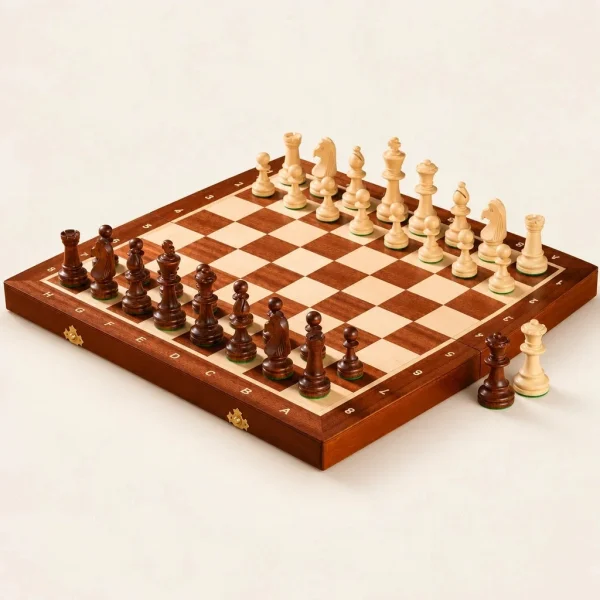
Some sets include an extra queen of each color, very useful when a pawn promotes: this is the case with our extra-queen models, such as the Régence No. 5 and its 34 pieces.
The chess pieces table
| Piece | Number | Move | Approximate value |
|---|---|---|---|
| King | 1 | One square in any direction | Priceless |
| Queen | 1 | Any number of squares, in a straight line or diagonally | 9 |
| Rook | 2 | In a straight line, horizontally or vertically | 5 |
| Bishop | 2 | Diagonally, always on squares of the same color | 3 |
| Knight | 2 | In an "L": two squares in one direction then one to the side; it jumps over other pieces | 3 |
| Pawn | 8 | One square forward (two from its starting square); it captures diagonally | 1 |
No piece, except the knight, can pass through an occupied square. You capture an opposing piece by moving onto its square.
Each piece in detail
The king
This is the most important piece: the whole game is about checkmating it. It moves only one square, but once per game it can castle with a rook to find safety. Cautious in the opening, it becomes an active piece in the endgame.
The queen
The most powerful piece combines the moves of the rook and the bishop. Yet it has not always been so strong: in the early versions of the game, it moved only one square diagonally. It was only at the end of the 15th century, in Europe, that the queen and the bishop gained their freedom of movement: the game then became faster and more tactical.
The rook
It rules the open files and ranks. Two connected rooks in the endgame are a formidable force. Its name comes from the Persian rukh, which originally meant a chariot.
The bishop
It glides diagonally and stays on squares of the same color throughout the game: each side therefore has a light-squared bishop and a dark-squared bishop. Its name is thought to derive from the Arabic al-fil, "the elephant", the piece it replaces in shatranj.
The knight
The only piece able to jump over others, it is the king of the fork, that simultaneous attack on two targets. It is particularly effective in the center of the board, and much less so in a corner.
The pawn
Modest in appearance, it gives the whole game its structure. It advances straight ahead, captures diagonally and never moves backwards. It has two special rules: en passant capture and promotion, which turns it into a queen, rook, bishop or knight when it reaches the last rank. Philidor, a great 18th-century player, wrote: "pawns are the soul of chess".
What are the piece values for?
The values (1, 3, 3, 5, 9) are reference points for judging an exchange: giving up a bishop (3) to take a rook (5) is generally a good deal. They remain approximate: a well-placed piece is sometimes worth more than its number, and a pawn about to promote can decide the game. The king has no numerical value, since losing it means the end of the game.
Where do our chess pieces come from?
Chess descends from chaturanga, a game played in India around the 6th century. Its four "arms" of the army, infantry, cavalry, elephants and chariots, became our pawns, knights, bishops and rooks. The game then passed to Persia, and on to the Arab world under the name shatranj, before reaching Europe around the year 1000. The word "checkmate" itself comes from the Persian shah mat, "the king is helpless".
The Staunton style, the standard since 1849
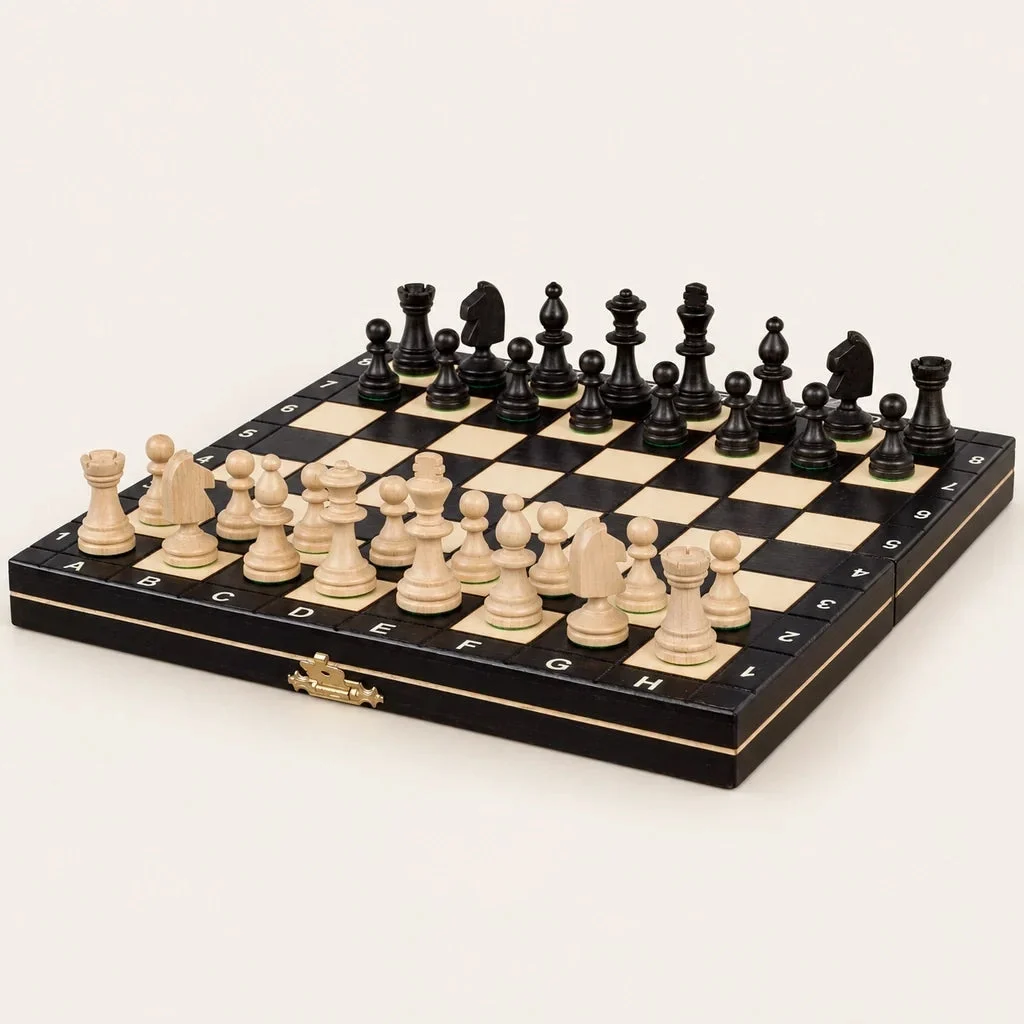
For a long time, each region had its own piece designs, which made games between players from different countries awkward. In 1849, a design by Nathaniel Cooke, backed by the English champion Howard Staunton, who gave it his name, became the standard. Its pieces are recognisable at a glance: the king's cross, the queen's crown, the bishop's split mitre, the knight's horse head, the rook's battlements.
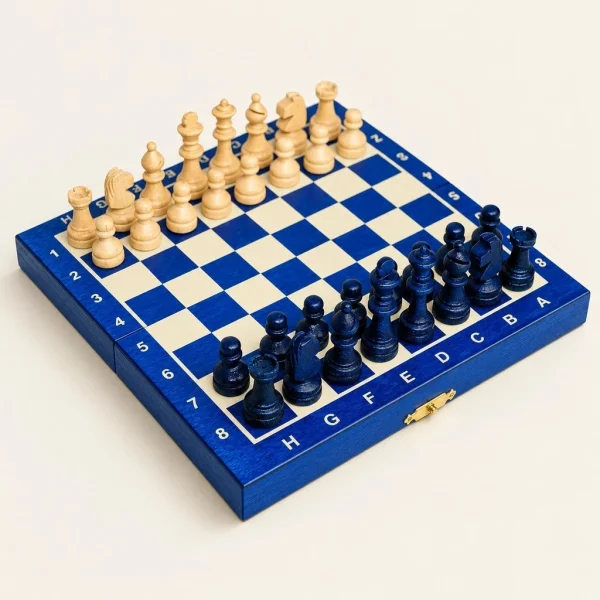
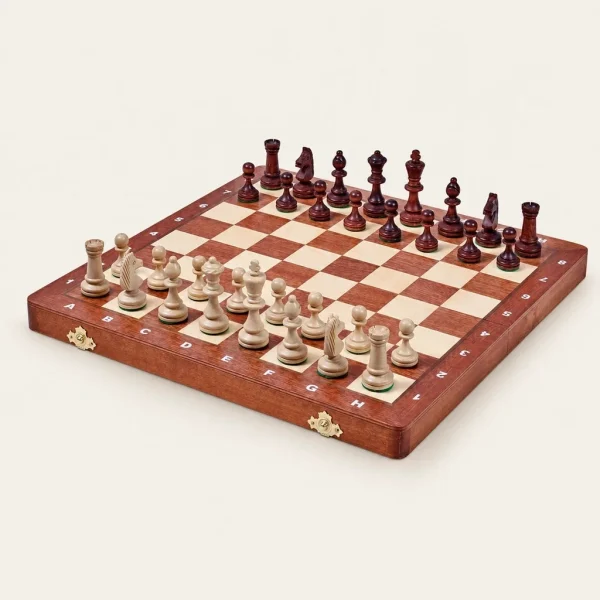
The Staunton style is still today that of most tournament chess sets. You will find it even on our small travel sets, such as the Petit Nomade bleu and its hornbeam pieces in Staunton style. For club play, a tournament format such as the Régence No. 4, with its weighted pieces and its 80 mm king, offers the stability expected in competition.
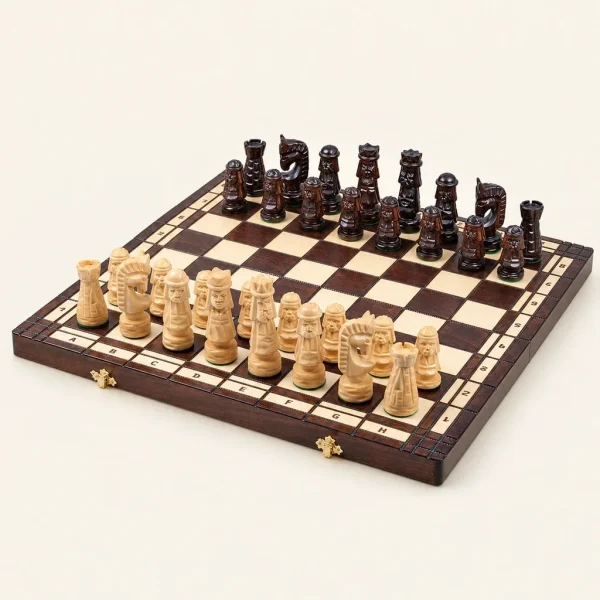
To recognize the pieces without hesitation, nothing beats a set with a classic design; but some prefer freer silhouettes, such as those of the Tatras, carved from lime wood.
Frequently asked questions
Why is the queen sometimes called the "dame"?
In French, the official term is "dame", which is why French chess notation uses the letter D. In English, "queen" is the standard term and is abbreviated to Q.
How do you set up the chess pieces at the start?
On the first rank, from left to right for White: rook, knight, bishop, queen, king, bishop, knight, rook. The pawns occupy the second rank, and the queen goes on the square of her own color.
Which is the strongest piece in chess?
The queen, worth about nine pawns. The king is more important, but not more powerful.
Conclusion
Six types of piece, thirty-two pieces in all, and centuries of history in each of them. To discover them for real, in your own hands, explore our complete wooden chess sets or, for a competition format with a Staunton design, our tournament selection.